
Explanation of Terms
Please click on a question to read an explanation. Click again to close that explanation.
Green Lanes Environmental Action Movement
GLEAM P.O. Box 5206, Reading RG7 6YT.
gleam-uk.org/wp
Patron: HRH The Duke of Edinburgh KG KT
Please click on a question to read an explanation. Click again to close that explanation.
These terms both mean a way over which the public has a right to pass and repass, though by convention the former term excludes roads normally used by motor vehicles. They may or may not be maintainable at public expense. They may be classified as follows:
A way over which the right of way is on foot only.
A way over which the right of way is on foot, on horseback and on pedal cycle, possibly with an additional right to drive animals.
A way over which the right of way is on foot, on horseback or leading a horse and for vehicles other than mechanically propelled vehicles, i.e. for pedal cycles and horse-drawn vehicles. Many Restricted Byways were formerly Roads Used as Public Paths (RUPPs), a classification which no longer exists.
A carriageway, i.e. a right of way for vehicular traffic, but one which is used mainly for the purpose for which footpaths and bridleways are used, i.e. by walkers and horse riders.
An old track formerly used for the droving of animals, which may or may not be classified as one of the above types of public right of way. A carriageway carries the right of driftway. A driftway does not carry the right of carriageway.
Any highway and any other road to which the public has access. It may be any of the classifications listed above, including ways to which the public has access by permission of the landowner, but not by right. A road does not necessarily have vehicular rights.
An obsolete term. It was provided by the National Parks and Access to the Countryside Act 1949 as a highway, other than a public path, used by the public mainly for the purpose for which footpaths or bridleways are so used. This was an unsatisfactory classification, as it did not define whether or not the way could be used by vehicles. Finally, at the third attempt, in the Countryside and Rights of Way Act 2000, all remaining RUPPs were reclassified as Restricted Byways. The commencement date was 2 May 2006 in England and 11 May 2006 in Wales.
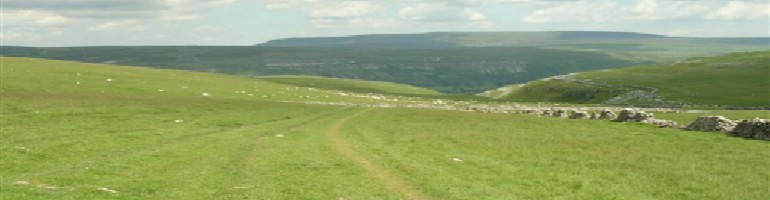
A green lane is a term with no legal meaning whatsoever. It is a physical description of an unsurfaced track, often, but not always, of some antiquity, normally bounded by hedges, walls, fences or ditches. It may be a footpath, bridleway, restricted byway or byway open to all traffic, public or private, and it may have no public rights of way at all.
A list kept by Highway Authorities of all highways, including roads, lanes, footpaths, bridleways, byways, squares, courts, alleys and passages which are maintainable at public expense. It is no indication that such a way carries vehicular rights.
This term is an invention of the Ordnance Survey. It is a route which is not shown on the Definitive Map and not shown coloured on the OS map (thereby leading to uncertainty about its status), but which is recorded in the Highway Authority’s List of Streets. It is no indication that such a way carries vehicular rights.
An obsolete term, created by the Local Government Act 1929 and abolished in the Local Government Act 1972, but still used by several Highway Authorities. All that can be deduced from the term is that it is a highway (including public right of way) maintainable at public expense, other than an ‘A’, ‘B’ or ‘third class' road. It is no indication that it carries vehicular rights.
A map kept up to date by each Highway Authority showing all Public Rights of Way of their different types in their area, whether or not they are maintainable at public expense, and a statement listing and describing each of these ways.
Events giving rise to Definitive Map Modification Orders can be one of two types:
The GLPG was an informal group of 25 like-minded organisations, some large and national, others smaller and more local, which was assembled by GLEAM early in 2005 to fight for various amendments to the Natural Environment and Rural Communities (NERC) Bill while it was going through both Houses of Parliament and then to work on the proper implementation of the NERC Act. GLPG represented the following organisations: Allen Valleys Action Group (Northumberland), Battle for Bridleways Group (Herefordshire), Brecon Beacons Park Society, British Driving Society, Cambrian Mountains Society, Campaign to Protect Rural England, Campaign for the Protection of Rural Wales, Campaign for National Parks, Country Land & Business Association, Cycling UK, Exmoor Society, Friends of the Lake District, Friends of The Ridgeway, GLEAM, Lake District Green Lanes Alliance, Long Bostle Downland Preservation Society (West Sussex), Moorland Association, North Wales Alliance to Influence the Management of Off-Roading (NWAIMOR), North York Moors Green Lanes Alliance, Peak District Green Lanes Alliance, Peak & Northern Footpaths Society, Save our Paths (SOPS) (North Wales), West Somerset and Exmoor Bridleways Association, Yorkshire Dales Green Lanes Alliance, Yorkshire Dales Society. These organisations represent a total membership of over 350,000 members.